

GWR 3000 ROD Class
Introduction
The successful Robinson 2-8-0 freight locomotives designed for the Great Central Railway was chosen for production of locomotives for the war department. When these engines became available upon the cessation of hostilities, the Great Western being one of the railway companies to purchase some, buying 100 between 1919 and 1925. The locos were duly Westernised with new chimney, dome, top feed, safety valve cover, etc., although this did not hide their original Great Central design characteristics.
Lot 122 A Great Western Railway brass cabside numberplate, "GWR, 3017", from a "ROD" 2-8-0 built by the North British Locomotive Co, Works No 22124, in April 1919 at their Queens Park Works for the Railway Operating Division of the Royal Engineers, ROD No 2029. No longer required for the war effort, the loco was sold to the GWR in July 1919 and allocated to Neath and then Carmarthen. It finished its GWR days at St Philip's Marsh and was withdrawn from Tyseley in October 1956. The front of the plate has been repainted red, the back is in original condition; the beading clearly stamped "ENGINE CLASS, 2-8-0 G, BOILER CLASS, M.A.". - Sold for £3700
Robinson Grand Central Railway design built from 1917 for Railway Operating Division (Royal Engineers) for use in France and the Western Front. After war service, one hundred were purchased by the GWR.
3017 North British Locomotive Co. Ltd., Glasgow L711 Taken into GWR stock under Lot No. 215 1919 withdrawn October 1956
http://www.cresselleyphotos.co.uk/
2-8-0 3017 outside the shed at St.Philips Marsh 4/10/55 ¾ RF1
Model
| 3-007 | 9mm Spoked Driving Wheels (4ft 8in) |
| 3-062 | 7mm Spoked Bogie/Tender Wheels (3ft 6in) |
Mashima 9/19
Gear Ratio = Motor RPM x Wheel Dia. (mm) x 0.018 / Prototype Speed (mph)
Gear Ratio = 23000 x 0.75 x 9 x 0.018 / 40 = 70:1
| Photographs | ||
 |
 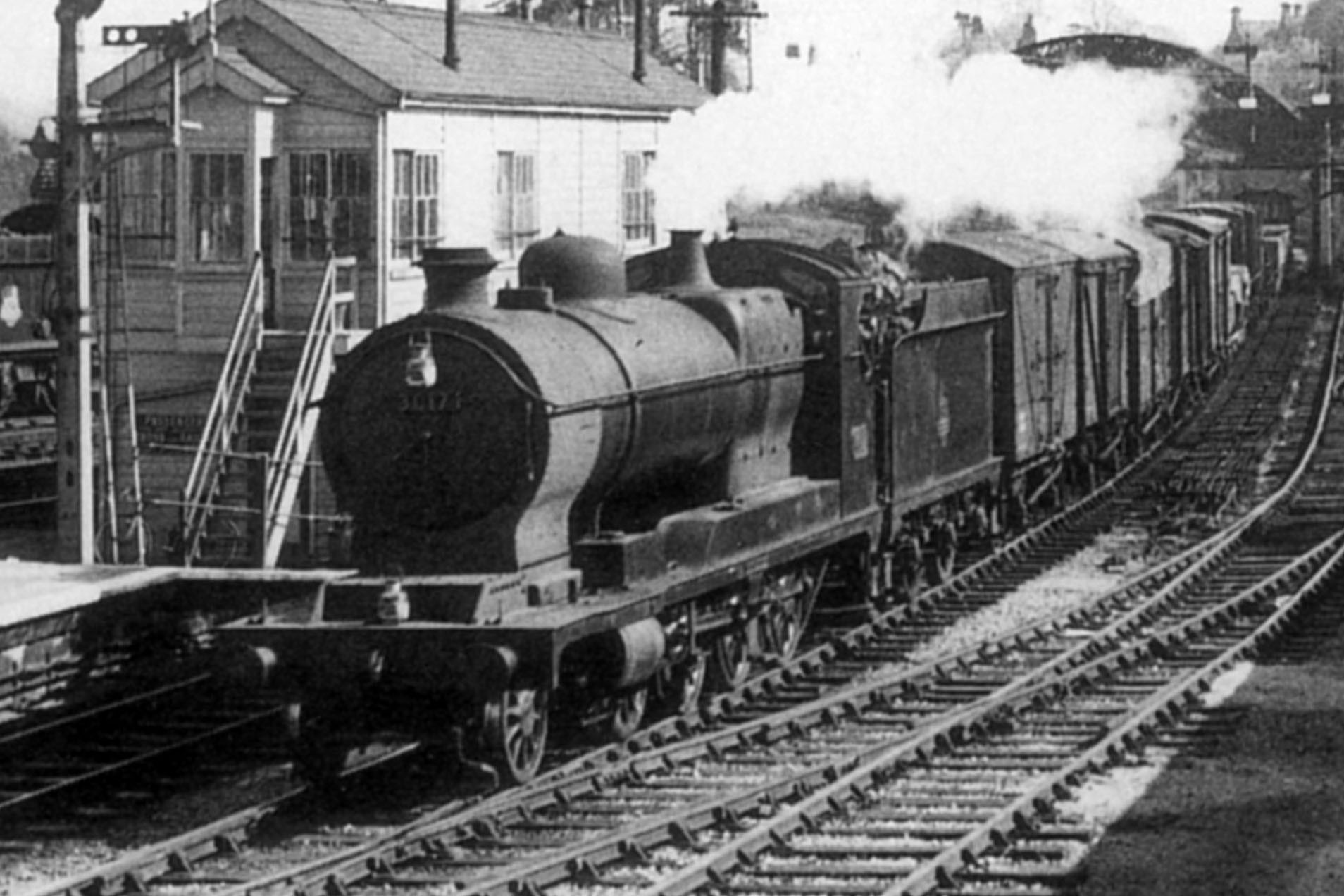 |
R.O.D. Class 2-8-0 No.3017 trundles through Newton Abbot on 25 April 1953 past Newton Abbot West Signal Box on the up through line. Twenty five mph was fast for these elderly locomotives, not fitted with vacuum brakes and they required and inordinate amount of effort to keep the huge boiler in steam. © Peter W. Gray |


